




Turning Play into Progress: An Update on Sustainability Efforts
Our Continued Commitment to Sustainability

At Sony Interactive Entertainment (SIE), we consider how gaming can have an impact beyond entertainment, including how we can reduce the environmental impact of our products and services, and raise awareness of environmental issues.
As part of Sony Group’s Road to Zero environmental plan, we focus on four key perspectives across the lifecycle of our products and services: climate change, conserving resources, controlling chemical substances and promoting biodiversity, from design and manufacturing through to use and end of life.
FY25 Sustainability Highlights
- 16% reduction in emissions
- Up to 50% lower PS5 power consumption with Power Saver
- 95–100% fiber-based packaging
- 741,180 trees supported through Aloy’s Forest
Climate Change
Sony Group has a target validated by the Science Based Targets initiative to reach net-zero greenhouse gas emissions across the value chain by FY2040 from a FY2018 base year. SIE continues to track and project organizational emissions annually across the largest sources of emissions, including; product use, manufacturing, packaging, distribution, retail, end-of-life, content distribution, and data centers.
Our latest projections indicate a downward trend over time, although estimated emissions fluctuate each year, in part due to the cyclical nature of console sales.
For FY25 we estimate that total organisational carbon emissions for SIE were approximately 16% lower than FY24.
This trend is mainly driven by expected reductions in the carbon intensity of electricity supply as countries adopt more renewable and lower carbon technologies. We also continued to take steps to reduce our climate impact, including:
Developing new energy saving features. In September 2025, we launched a new feature for PS5 and PS5 Pro consoles called Power Saver for games to help reduce carbon emissions. When enabled by users, PS5 games supporting this feature will scale back performance and will allow the console to reduce its power consumption by up to 50%. Games that support this feature display the new Power Saver icon on PS Store and next to the game title on the Home Screen.
Enabling users to support renewable energy projects. Last year, we highlighted a new third-party application called CleanPlay, available in the PS Store for PS5. Now named ‘SuperPower’, the application helps players understand the energy use of gaming and ways to reduce it, while also matching them with opportunities to support renewable energy projects and the transition to zero-carbon energy, offering digital rewards for their contributions.
Players can also learn more about the initiatives supported through the app and choose which projects they would like to contribute to. For more information on SuperPower, you can visit https://www.getsuperpower.com/.
We continue to assess new approaches and opportunities to reduce carbon emissions and support progress towards our long-term targets.
Conserving Resources
The production and distribution of game consoles requires significant quantities of natural resources, including rare earth metals, plastics, and other materials. We aim to use these resources more efficiently across our business activities and throughout the lifecycle of our products, including reducing resource consumption and increasing the use of recycled materials.
In FY25, our focus remained on improving resource efficiency through materials and packaging:
Reducing plastic in our packaging. We continue to investigate opportunities to reduce the plastic in our packaging. In FY25, we began introducing a cotton-based alternative to the MIRAMAT plastic bags used to protect some of our products. Across our current product range, packaging is typically made from 95–100% fibre-based materials, depending on the product and region.
Using recycled plastics in our products. We incorporate recycled polypropylene plastic from post-industrial waste in our game disc cases in Europe, the United States, Australia, and New Zealand. Average recycled content in these markets increased from 14% in FY22 to 24% in FY24 and FY25.
Including Japan and other parts of Asia, average recycled content across these markets was 22% in fiscal year 2025.
Office initiatives on single-use plastics. Our global offices continue to make progress to reduce single-use plastic items wherever possible. For example:
- Our employee cafe in Liverpool has kept its 100% no single-use item status.
- Our London office has replaced all single-use items except breakfast pot packaging for reusable bowls.
- All packaging items in our San Mateo cafe are compostable.
- Our Tokyo Shibaura Crystal Shinagawa (SCS) office cafe has eliminated individual sugar syrup containers.
Supporting Biodiversity and Ecosystem Restoration
Through the PlayStation brand and products, SIE has opportunities to engage a community of over 120 million monthly active users. We continue to explore how our creativity, technology and partnerships can help raise awareness of environmental issues, including biodiversity and ecosystem restoration.
Through our commitment to the United Nations Playing for the Planet Alliance, we continue to connect gameplay and digital experiences with real-world environmental initiatives.
Supporting ecosystem restoration. In 2022, we launched Aloy’s Forest, an initiative supporting ecosystem conservation and restoration projects in conjunction with the launch of Horizon Forbidden West, a PlayStation Studios game developed by Guerrilla Games. The game’s storyline, Aloy’s quest to restore order and balance to her world, reflects themes of nature, biodiversity and the importance of protecting the environment.
As of March 2026, this initiative has supported the planting of 741,180 trees, with 56,180 trees planted during FY25 on former strip-mining land in the United States in an effort to help reestablish the once-prevalent forest habitats of this region. New projects this year with Arbor Day Foundation will enable planting 84,820 more trees in locations such as Kentucky, Guatemala, and Malawi, and will focus on expanding the initiative’s impact on land restoration, watershed protection, food resilience, and community livelihoods.
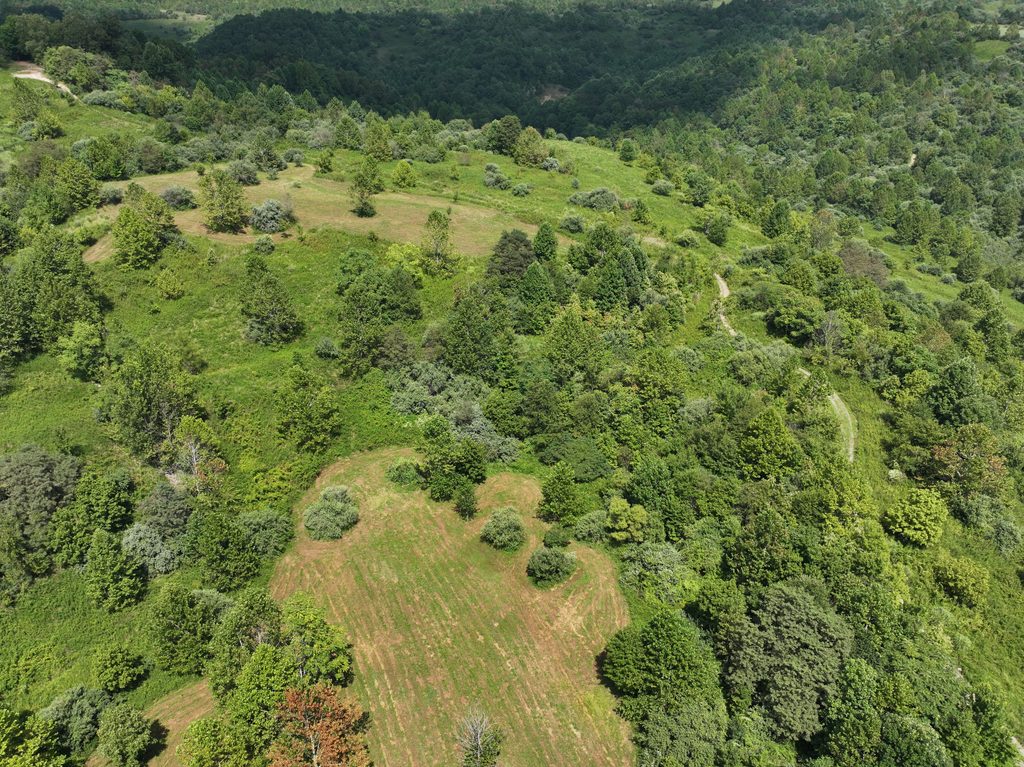
Aerial view of project site in the Central Appalachia. One of the main goals of restoring these lands was to increase biodiversity to support local ecosystems and wildlife, with a variety of regionally-appropriate species selected for planting like red spruce, oaks, hickory, and shortleaf pine.
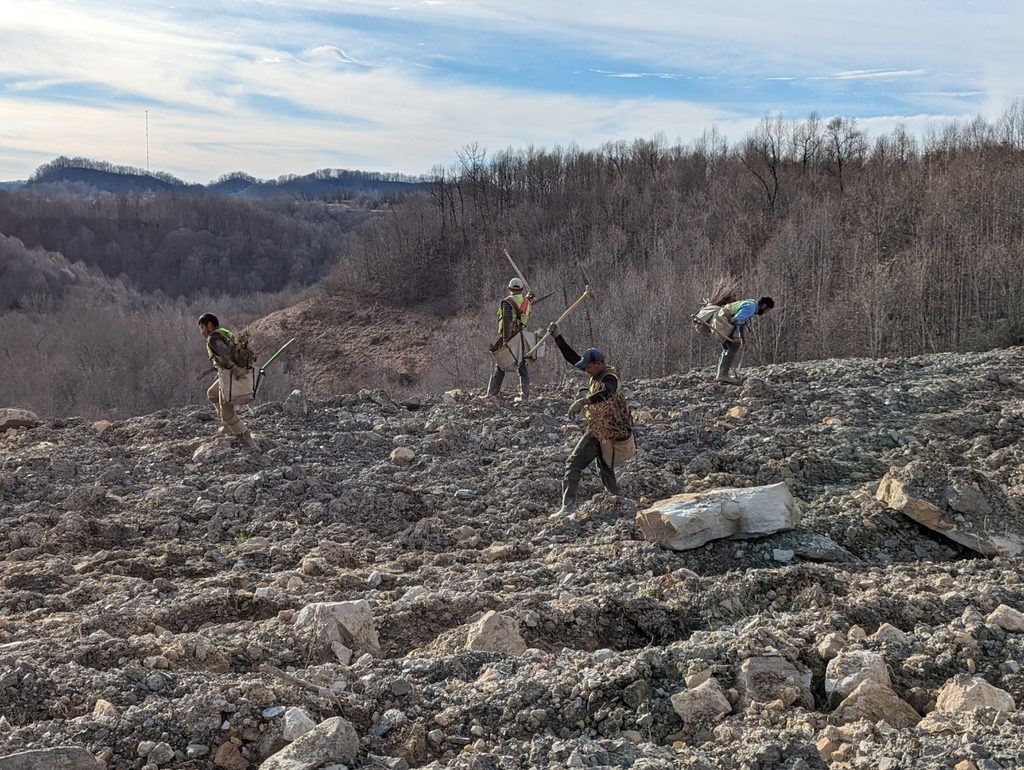
Reforestation crew works to loosen soil and plant tree seedlings on reclaimed coal mine land in eastern Kentucky. The Central Appalachian Region has a history of surface coal mining, with many areas reclaimed under the Surface Mining Control and Reclamation Act of 1977. However, reforestation was not mandated, leading to former mine sites in eastern Kentucky and West Virginia being overrun by invasive vegetation that prevented natural tree growth.
Funding new research with the University of Oxford’s Department of Biology. Last year, we announced a new research project to create a digital forest model within Oxford’s Wytham Woods, with the aim of advancing and validating low-cost imaging and sensing technologies for assessing biodiversity and above-ground carbon storage. The initiative has now expanded beyond this initial validation phase, with the development of a comprehensive digital twin of Wytham Woods integrating ecological, remote sensing, and AI-driven monitoring data.
The project will use smartphone-based tools and 3D-imaging and sensing technologies provided by the AITRIOS™5 platform from Sony Semiconductor Solutions. This work continues to explore how these technologies can support scalable biodiversity monitoring and ecosystem resilience assessments across diverse environments. The team plans to test these technologies at one or more reafforestation sites globally, working together with our partners at the Arbor Day Foundation.
Lead Investigator, Prof. Graham Taylor, commented:
“Recent advances in cutting-edge AI have enabled us to reconstruct and visualize the 3D architecture of plants using affordable handheld devices in place of expensive scanners. Our vision is to advance and validate these low-cost technologies here in Oxford so that they can be put into the hands of communities around the globe to assess biodiversity, monitor recovery, and measure carbon storage locally.”
Strengthening data driven conservation. We supported ZSL projects to enhance conservation effectiveness in protected areas by providing advanced SMART (Spatial Monitoring and Reporting Tool) training to 83 participants from more than 12 countries. ZSL is a founding member of SMART, an innovative technology platform for monitoring and managing wildlife and threats in protected areas, which empowers frontline conservationists in over 1,500 parks across 100 countries to practice data-driven conservation.
Raising climate awareness through interactive technology
In June 2025, we launched Climate Station™, a new application developed in collaboration with the UN Environment Programme (UNEP). Climate Station uses virtual reality technology to help people view, interact with and better understand climate data, with the aim of raising awareness of climate change.
The application presents climate information through three main areas: Weather Year, Observations and Projections. Weather Year introduces users to the interconnected weather systems of planet Earth through a visual exploration of meteorological events. Observations enables users to explore more than a century of climate data, including temperature records from thousands of locations. Projections uses climate model data to help users consider how different future pathways could affect the climate by the end of the century. Climate Station also includes an Explainer Library with multimedia content about climate change, weather systems, and drivers of change. The application uses data from scientific sources including NASA, NOAA, Berkeley Earth, the Climate Research Unit and the World Climate Research Programme.
The response so far has been encouraging. Climate Station reflects SIE’s ongoing work to explore how creativity and technology can help make environmental information more accessible and support greater awareness of climate change.
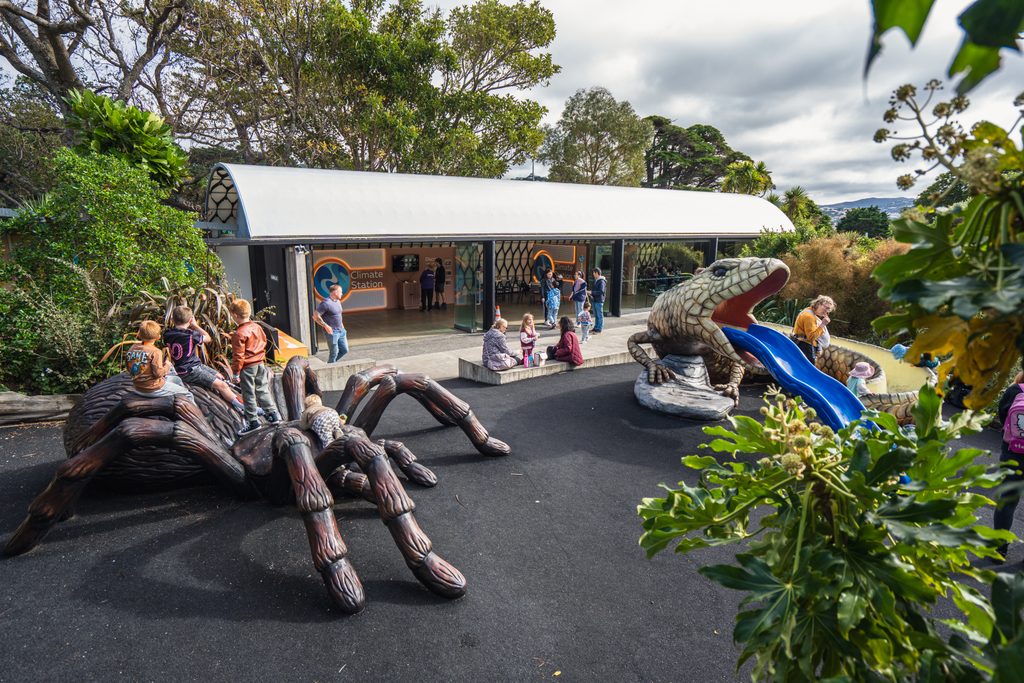
Through FY25, we have been bringing Climate Station to the public at demonstrations across several regions, including the London Zoo; the University of Reading’s Show Your Stripes Day and Global Sustainability Leaders Scholarships event; events in China, including BiliBili World and the Sustainability Leader Conference in Shanghai; and Wellington Zoo in New Zealand. We also have further demos planned at the Bengaluru Science Gallery in Bengaluru, India, and the Computerspielemuseum in Berlin, Germany.
New findings from our research with the University of Oxford. SIE has continued to support research with the University of Oxford into how games can raise awareness of environmental issues and support more informed choices. In April 2026, Oxford published a preprint based on a purpose-built game developed by Media Molecule, which tested whether environmental content within gameplay could influence sustainable food choices outside the game. The study involved 4,000 UK adults and found that, after playing, participants selected grocery baskets that scored approximately 20% more sustainable under the study methodology, with an improvement of approximately 10% still evident several weeks later.
These findings suggest that environmental content in games may have the potential to influence behaviour, as well as raise awareness, when it is thoughtfully designed and grounded in evidence. SIE will now work with Oxford to develop voluntary guidance for studios on incorporating environmental themes in ways that are accurate, authentic to gameplay, and appropriate for audiences.
Employee volunteering
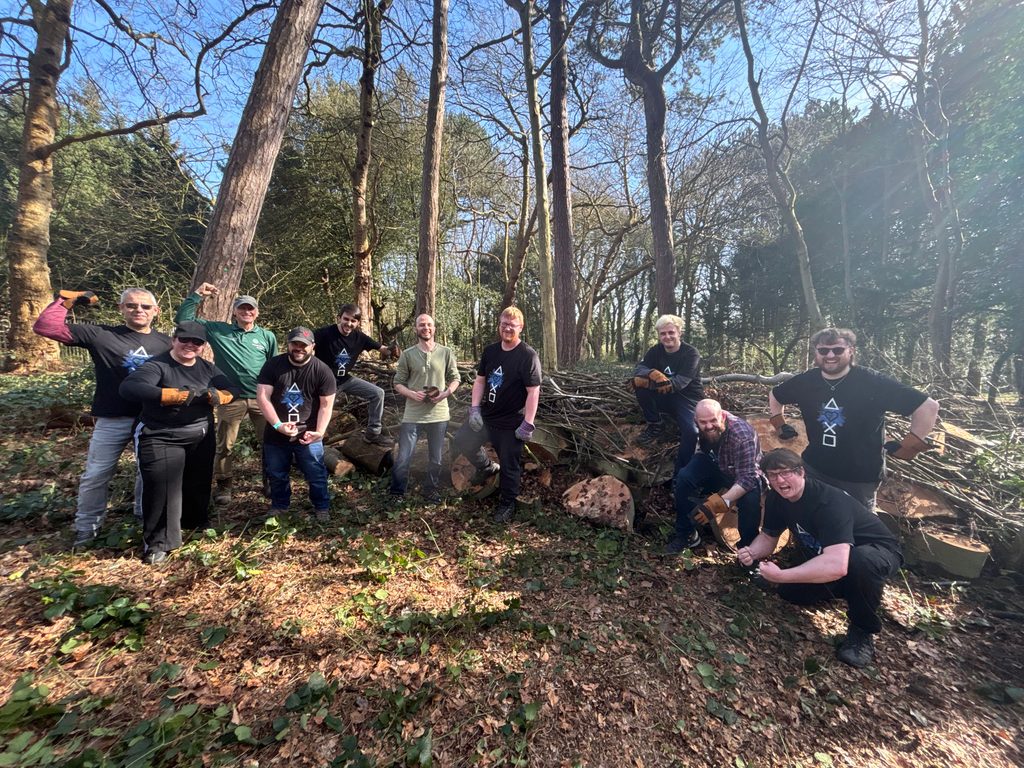
Our employee volunteer programs continued with global participation in a range of beach clean ups and conservation activities over the past year. We give thanks to our partners including The NHS Forest, The Friends of Tower Hamlets Cemetery Park in the UK, as well as the Surfrider Foundation and I Love a Clean San Diego in the US. In our Tokyo offices, our employees participated in monthly clean-up activities at areas around Shinagawa railway station.
Recognition from the United Nations
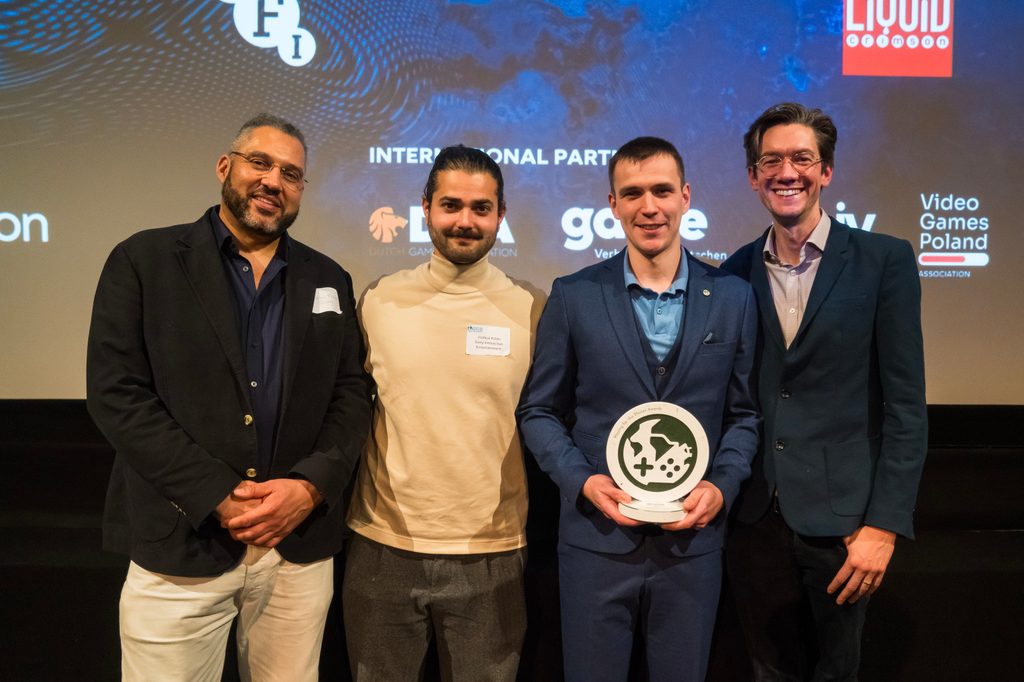
In FY25 we received the United Nations Playing for the Planet Alliance first-ever special innovation award for combined efforts on decarbonisation, research on environmental activations in games, using our technology and IP to inspire action, and industry collaboration efforts.
About our approach
Sony’s sustainability vision, Inspire a World Filled With Emotion for This Generation and Beyond, reflects its commitment to creating a society where everyone can live with peace of mind in a healthy and natural environment.
This vision is the foundation of our sustainability efforts, supporting it with our aim to use our creativity and technology to inspire change and have an impact beyond gaming by acting on three principles:
- Forging our own path
- Turning intention into action
- Doing the right things and doing them well.
There is more to do, and progress depends on continued collaboration across our industry and beyond.
We remain focused on how our technology, creativity, and community can contribute to meaningful environmental progress.
Players can take part by enabling features such as Power Saver and Adaptive Charging, exploring experiences like Climate Station, or learning more about environmental initiatives on PlayStation through apps such as SuperPower. These everyday choices can help support progress over time.
Related Posts